
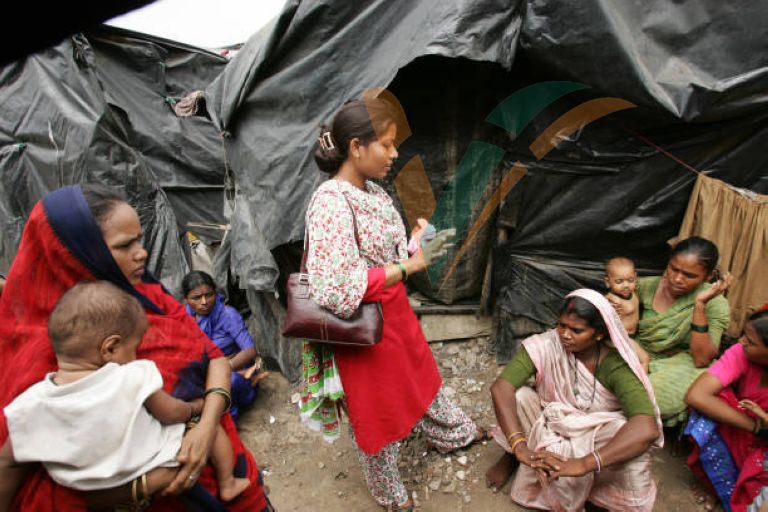
The corona virus outbreak has shined a spotlight on the often overlooked underbelly of India’s “city of dreams” – the slums and other informal settlements where about 49% of its population resides. This population, accounting to around 46 lakh people, lives in slums that occupy barely 7.5% of the city’s area according to Slum Rehabilitation Authority’s city survey data.
Dharavi, one of Asia’s largest slums, was a Covid-19 hotspot a few weeks ago but has under 100 active cases currently. While the number of infections seems to be in control at the moment the risk of spread continues to remain high within these neighbourhoods where unusually high population densities – up to 350 families per hectare against the city average of 38 as per the 2011 Census. Poor drinking water and sanitation facilities mean that social distancing is virtually impossible.
Cities are envisaged as the hub of economic, social and technological advancements and opportunities, which brings in an incessant flow of migrants to them. This “urban pull” is driven by the perception that the expanse of the material infrastructure of a city narrates the improved quality of social life that one may attain on relocating from smaller towns or rural areas.
However, widening gaps between growing city populations and physical and social infrastructure required to accommodate them is leading to a lopsided pattern of urban development accompanied by an increasing number of urban poor.
For instance, while Mumbai grew spectacularly as an urban centre in the years following India’s independence, the geographical constraints of the island city have caused serious problems today. With a premium attached to limited land and space, land and building prices have skyrocketed.
This pushes incoming migrants, who make up the majority of the city’s population, to seek housing within low-cost, poorly designed shanties and tenements in informal settlements with extremely poor living conditions.
VISHWAKENDRA FOUNDATION’s Other Goal is Help to solve children’s and women’s problems.Slum Community development, support women and children in Slums.
So What is The Future of Slums in a Post-Covid-19 World? Can we Formalise the Informal? Also in INDIA ?
