
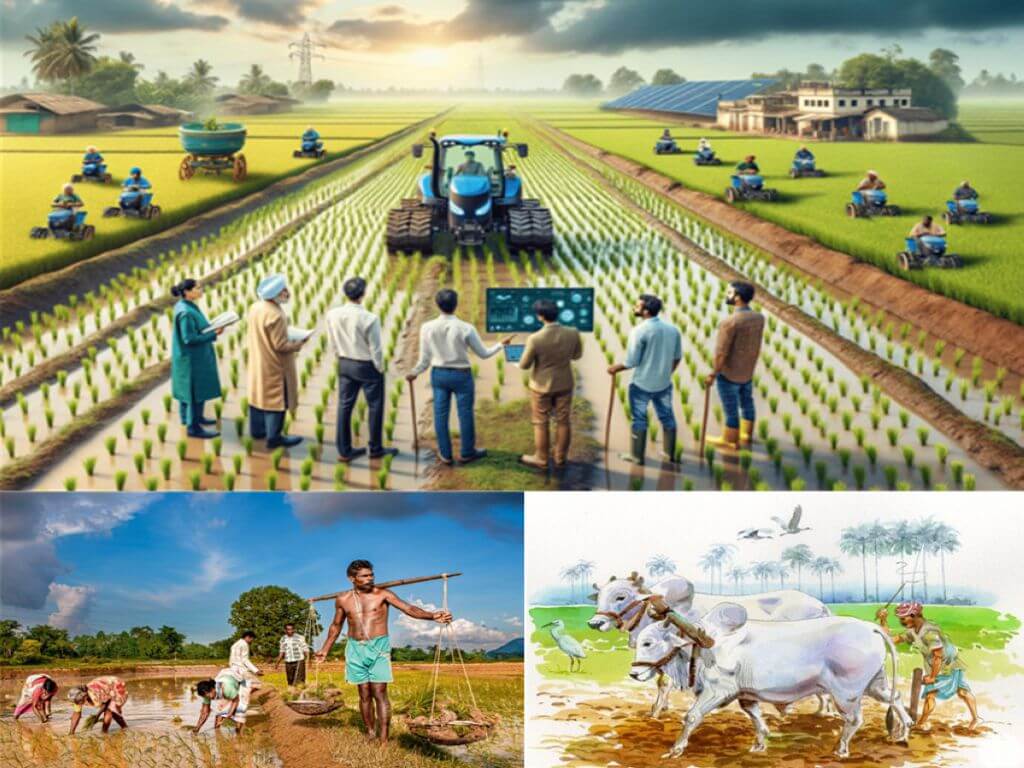
Setting up an Agri-farmers Center in rural areas of India involves creating a hub that provides farmers with resources, knowledge, and services to enhance agricultural practices and improve livelihoods. Here are key components and services that could be part of such a center:
- Agricultural Extension Services:
- Crop Advisory Services: Provide guidance on crop selection, cultivation techniques, and pest management.
- Soil Testing: Offer soil testing services to help farmers understand soil health and recommend appropriate fertilizers.
- Access to Seeds and Quality Inputs:
- Seed Distribution: Ensure access to quality seeds, including high-yield and drought-resistant varieties.
- Input Supply: Facilitate the supply of fertilizers, pesticides, and other agricultural inputs.
- Training and Capacity Building:
- Workshops and Training Programs: Conduct regular training sessions on modern farming techniques, water management, and sustainable practices.
- Skill Development: Provide skill development programs for adopting new technologies and machinery.
- Farm Machinery and Equipment:
- Equipment Rental Services: Establish a system for farmers to rent or share expensive machinery like tractors.
- Training on Equipment Use: Offer training on the proper use and maintenance of farm machinery.
- Market Linkages and Value Addition:
- Market Information Services: Provide information on market trends, prices, and demand.
- Promote Value Addition: Encourage farmers to add value to their produce through processing and packaging.
- Water Management:
- Rainwater Harvesting: Promote rainwater harvesting techniques to ensure water availability during dry periods.
- Efficient Irrigation Practices: Educate farmers on efficient irrigation methods to conserve water.
- Livestock Management Support:
- Animal Husbandry Services: Provide advice on livestock rearing, health management, and breeding.
- Access to Veterinary Services: Facilitate access to veterinary care for farm animals.
- Credit and Financial Services:
- Microfinance Support: Facilitate access to microfinance services for purchasing inputs and equipment.
- Financial Literacy Programs: Provide financial literacy training for better financial management.
- Weather Information Services:
- Weather Forecasting: Share weather forecasts and alerts to help farmers plan their activities.
- Climate-Resilient Farming Practices: Promote practices that enhance resilience to climate change.
- Storage and Post-Harvest Management:
- Cold Storage Facilities: Establish or facilitate access to cold storage facilities for perishable produce.
- Training on Post-Harvest Techniques: Educate farmers on proper post-harvest handling and storage.
- Organic Farming Promotion:
- Training on Organic Farming: Provide training on organic farming practices.
- Certification Support: Assist farmers in obtaining organic certification for their produce.
- Community Networking:
- Farmers’ Cooperatives: Facilitate the formation of farmers’ cooperatives for collective bargaining and resource-sharing.
- Knowledge Exchange Platforms: Create forums for farmers to share experiences and best practices.
- Technology Adoption:
- ICT Solutions: Integrate information and communication technology for remote advisory services and market access.
- Smart Farming Practices: Promote the use of smart farming technologies for efficiency.
- Government Schemes and Subsidy Assistance:
- Information Dissemination: Share information about government schemes and subsidies available for farmers.
- Assistance in Application Processes: Help farmers in applying for and accessing government support.
- Research and Development:
- Collaboration with Agricultural Research Institutions: Partner with research institutions to bring the latest innovations and technologies to farmers.
- Field Trials: Conduct field trials to test and adapt new varieties and technologies to local conditions.
Continuous engagement with the community, regular assessments of the impact of programs, and a participatory approach are crucial for the success of an Agri-farmers Center in rural areas. Additionally, strong collaborations with government agencies, NGOs, and private partners can enhance the center’s effectiveness and sustainability.
