
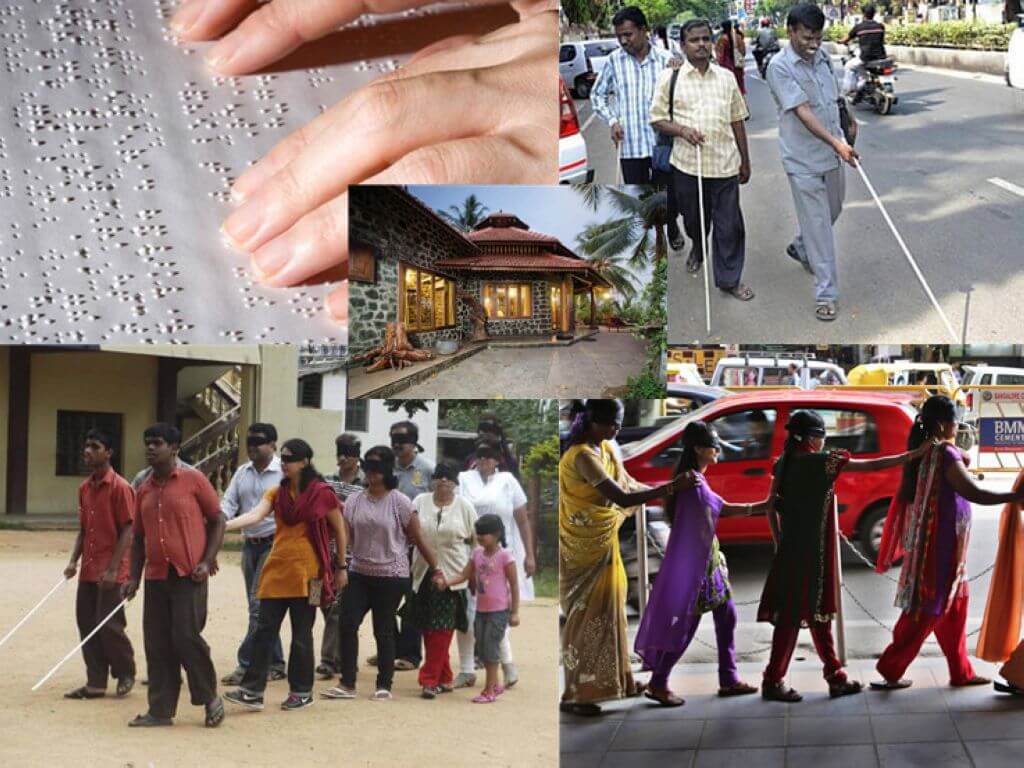
Establishing a Blind and Disadvantaged Rehabilitation Center in India involves addressing the specific needs of individuals who are blind or visually impaired and face additional socio-economic challenges. Here are key components and services that could be part of such a center:
- Educational Programs:
- Provide accessible education tailored to the needs of individuals with visual impairments.
- Offer braille literacy, assistive technology training, and other educational resources.
- Skill Development Workshops:
- Conduct workshops to develop vocational skills, such as computer skills, massage therapy, or handicrafts that can lead to employment opportunities.
- Employment Placement Services:
- Establish partnerships with local businesses to facilitate employment opportunities for individuals with visual impairments.
- Provide job placement assistance and support services to ensure successful integration into the workforce.
- Assistive Technology Training:
- Offer training in the use of assistive technologies that enhance accessibility and independence.
- Provide access to adaptive devices and software.
- Braille Library and Resource Center:
- Establish a braille library with a diverse collection of books and resources.
- Offer resources in multiple formats, including braille, large print, and audio.
- Healthcare Services:
- Provide accessible healthcare services, including regular health check-ups and access to specialists.
- Collaborate with healthcare professionals knowledgeable about the needs of individuals with visual impairments.
- Independent Living Skills Training:
- Offer programs to enhance daily living skills, such as cooking, mobility training, and personal care.
- Provide orientation and mobility training to navigate public spaces independently.
- Counseling and Emotional Support:
- Have counselors and support groups to address the emotional and psychological needs of individuals with visual impairments.
- Create a supportive environment for individuals to share experiences and concerns.
- Community Outreach and Advocacy:
- Engage in community outreach to raise awareness about the capabilities and needs of individuals with visual impairments.
- Advocate for inclusivity and accessibility in public spaces and services.
- Recreational and Cultural Programs:
- Organize recreational activities, sports, and cultural events that are inclusive and accessible.
- Encourage participation in arts, music, and other cultural activities.
- Accessible Infrastructure:
- Ensure that the physical infrastructure of the center is accessible, with ramps, tactile pathways, and other features to accommodate individuals with visual impairments.
- Financial Literacy Programs:
- Provide financial literacy workshops to empower individuals with the knowledge to manage their finances independently.
- Connect individuals with available financial assistance programs.
- Community-Based Rehabilitation:
- Extend rehabilitation services to communities, promoting inclusivity and reducing barriers to access.
- Parent and Family Support:
- Offer support services and training for families of individuals with visual impairments.
- Facilitate networking and support groups for families to share experiences and resources.
- Regular Assessments and Individualized Plans:
- Conduct regular assessments of the needs and progress of each individual.
- Develop and update individualized rehabilitation plans based on assessments.
Partnerships with government agencies, NGOs, and local communities can strengthen the impact of the rehabilitation center. It’s important to stay informed about evolving technologies and practices in the field to provide the best possible services. Additionally, advocacy efforts can contribute to creating a more inclusive society for individuals with visual impairments.
