
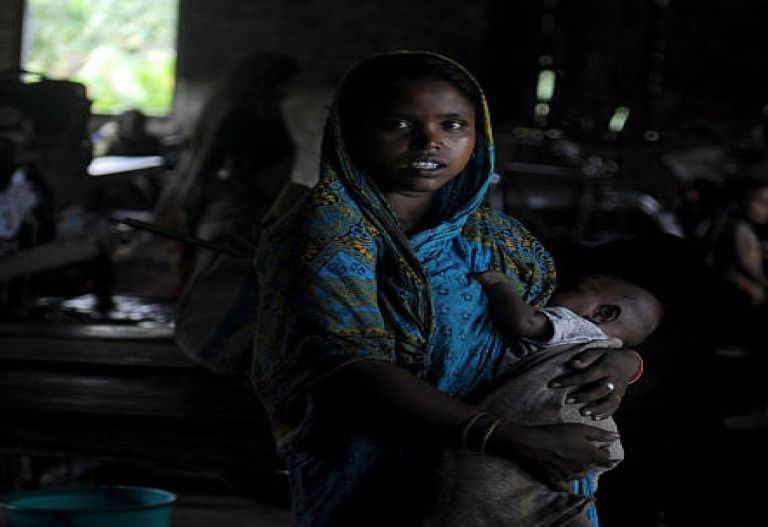
More than 3,000 children in India die every day from illnesses related to poor nutrition. Hunger in India remains an alarming issue due to rising food prices and available agricultural land. While food grain production is increasing, it hasn’t been sufficient enough to feed the entire population.
Neonatal health is assuming an increasingly prominent position in global health arena over the past decade, as revised cause of death estimates provided evidence of the substantial contribution by mortality of neonatals to children aged 5 years. Approximately two-thirds of children 1 year of age die during the neonatal period, thus reflecting the vulnerability of neonates. Almost all neonatal deaths (99%) occur in low- and middle-income countries and about half of them happen at home. One of the prime reasons could be that most births in developing countries take place at home, where mothers seek limited antenatal and postnatal care. Further, three quarters of neonatal deaths occur in the first week of life, suggesting the need for intervention in early neonatal care. Inappropriate neonatal care practice has been cited as an important contributor to high neonatal mortality levels and drew attention toward improving newborn care globally.
Neonatal care is deeply embedded into a community’s sociocultural fabric. For instance, a study in Uganda has identified practices like applying lizard droppings to the umbilical cord, which could have put the neonate at a higher risk of infection and ill health. Similarly, a group of researchers in Honduras have demonstrated how newborns are more vulnerable to infections owing to some inherent rituals. Few studies from India have also highlighted the traditional practices like cutting umbilical cord by bamboo piece or through crushing by stone, and newborn feeding practices like herbal paste and goat’s milk, and have suggested for change through appropriate communication. Unless the cultural beliefs underpinning the traditional practices are known, it might be difficult to achieve any change in care behavior.
This is more applicable for a country like India with diverse sociocultural structure because each ethnic group has its own practice system for care-seeking and care-giving, and thus necessitates a community-specific study. Among all Indian states, Odisha is leading in neonatal mortality and is home to the highest variety of tribal populations. The tribal districts in the state bear the disproportionate brunt of neonatal mortality when compared with their non-tribal counterparts. Successful key behavior change entails a thorough understanding of the target community members and the key factors influencing the behaviors in question. To garner such in-depth understanding, qualitative research is more appropriate.
It helps to elicit valuable information and provides insights about what could motivate this audience to improve its neonatal care practices. We conducted a qualitative study at the household and community levels with a focus on childbirth and newborn care practices in a tribal-dominated district in India. It is expected that this informed understanding of childbirth and neonatal care practices can provide a basis for the development of strategies for improving neonatal survival in tribal India.
VISHWAKENDRA FOUNDATION, We Provide Our Best to Supply Supply Healthy Nutritional Food for Newborn Baby-kids and children Also the Cloths Napkins and what their Needs in Tribal and Rural areas.
